GRColLo3a.GIF (8693 bytes)
International Marketing Office for Sittler Compost Equipment

Turners

1014 Turner

512 Turner

509 Turner

507 Turner

Water Injection

Efficiency

Why Sittler

Compost Covers

Windrow Care


Spreader

Screeners

Bagger

Conveyors

Used Machines


Inoculation

Testimonies

Compost News

Greenhouse Gas

Accessories

Compost DVDs

ABC Compost


Monitor Form 1

Monitor Form 2

Acrobat Reader


Soil Amending

History

Concerns

Natural Method

Evidence

gypsum+

Application

Brix

Healthy Soil


Lawn & Garden

Links


HomePrivacy PolicyServiceSite MapContact UsManuals


History of Agriculture
Using minerals to rejuvenate soil is not a new idea. For thousands of years, in ancient cultures, silt was taken from the bottom of rivers and used as fertilizer to cultivate crops and this practice is still used in some regions today. However, many lakes and rivers are now tainted with pollutants and dredging what is left of the Eco system can be destructive and hazardous to our water supply.

.
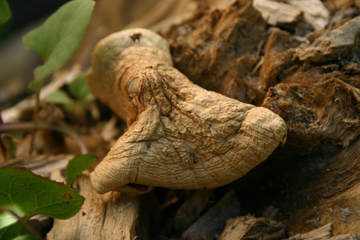
This stubborn stump, cut down in a backyard, was slow to start decomposing, so we added some of our Compost Rock Flour TM and mushrooms soon began to flourish.

In nature, fertile soil is created by the breakdown of large sections of minerals, trace elements and the accumulation of organic matter, humates, air, water and an abundance of micro organisms. The practice of crushing minerals and using them to enrich soil was discovered in the 1800’s by Dr. Julius Hensel. Hensel had accidentally crushed some pieces of granite while milling some grain. He threw the pulverized powder into his garden and was surprised to see how vigorously the plants grew. He later repeated the experiment and broadcast crushed minerals around some withering apple trees. To his amazement the trees responded remarkably and bore impressive fruit. Prior to the mineralization the trees had wormy imperfect fruit. Hensel continued using pulverized minerals with consistent success. Word soon spread and there was a demand for these crushed minerals.

During this time there was also a chemist named Liebig who had other ideas. His belief was that plants require only 3 nutrients, Nitrogen, Phosphorous and Potassium, NPK. His theories were soon accepted by companies looking for quick fix solutions and high profits. With more aggressive marketing techniques the public was soon swayed to believe Liebig’s NPK approach. Although Liebig later realized he was wrong and recanted before he died,

"When a chemist makes mistakes in rating agricultural fertilizers, don’t be too critical of his errors, because he has had to base his conclusions on facts which he can’t know from his own experience. After I learned the reason why my fertilizers weren’t effective in the proper way, I was like a person that received a new life. For along with that, all process of tillage were now explained as to their natural laws. Now that this principle is known and clear to all eyes, the only thing that remains is the astonishment of why it hadn’t been discovered a long time ago. The human spirit, however, is a strange thing: whatever doesn’t fit into the given circle of thinking, doesn’t exist." Ironically, Liebig’s theories are still accepted today.

Natural mineral particles act as parent material for soil formation. Although minerals may naturally be drawn to the surface current growing expectations and practices can deplete soil of essential trace minerals and micro nutrients.

Our research indicates adding minerals to compost is the most beneficial method for successful cultivation. Smaller amounts may be used. The microbes allow the nutrients to be biologically available. Minerals require microbes for activation. Compost Rock FlourTM is a formulated blend which contains beneficial microbes for inoculation purposes. This activator may be added at a rate of 1-3 % by volume to compost to accelerate the conversion of organic to humus.


HomePrivacy PolicyServiceSite MapContact UsManuals


Sittler manufacturing has been designing and building machinery for over 35 years. Quality, affordable craftsmanship with innovative design.

To order, or for more information please email: sales@globalrepair.ca, or call 1-866-271-0719, 1-416-686-3690,
fax 1-416-686-1744


This site is copyright protected and may not be reproduced in whole or part, other then for personal viewing, without written consent from the webmaster. Copyright © 1996-2011 Global Repair LTD


Sittler manufacturing has been designing and building machinery for over 35 years. Quality, affordable craftsmanship with innovative design.

To order, or for more information please email: sales@globalrepair.ca, or call 1-866-271-0719, 1-416-686-3690,
fax 1-416-686-1744


This site is copyright protected and may not be reproduced in whole or part, other then for personal viewing, without written consent from the webmaster. Copyright © 1996-2012 Global Repair LTD